

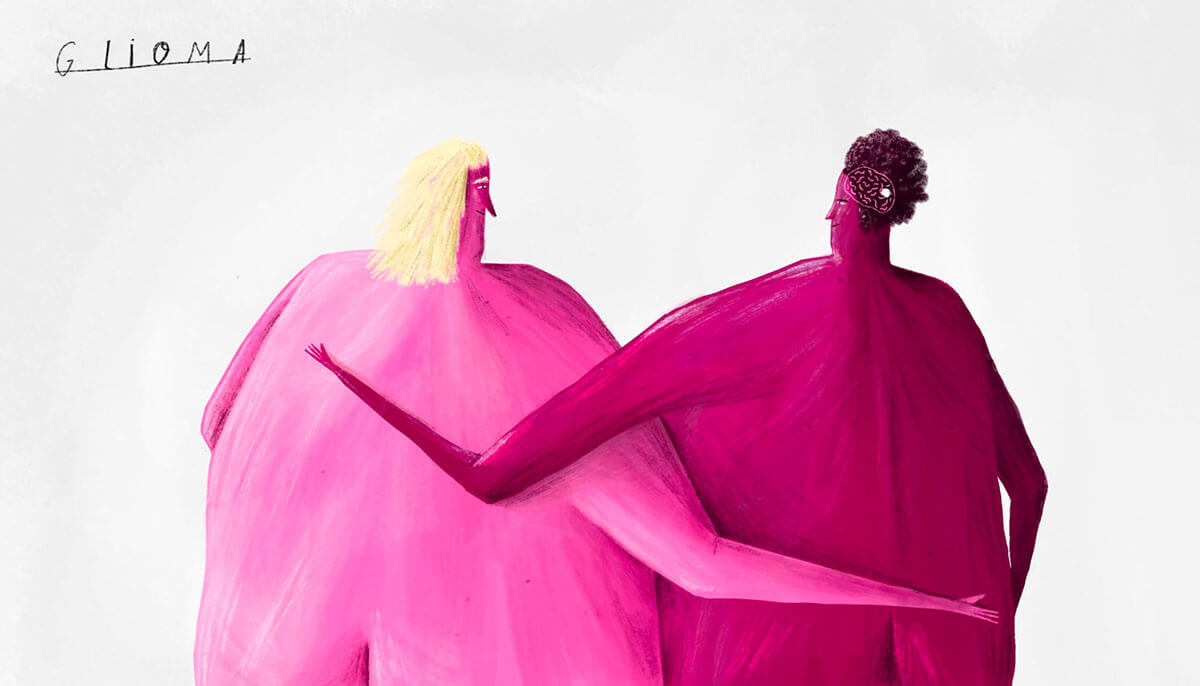
Gliomas are a type of primary brain tumour, distinctly different from metastatic (secondary) brain tumours.
Primary brain tumours, such as gliomas, develop directly in the brain. Secondary brain tumours, by contrast, originate in other parts of the body, like the lungs, breast, or bowel, and spread to the brain.
The brain is composed of two main types of cells: neurons and glial cells.
Tumours of the neurons are very rare. Tumours of the glial cells on the other hand are much more common. They are collectively called gliomas. In fact gliomas make up 2 of the top 4 most common brain tumours in adults
There are 4 grades of gliomas.
Caused by the tumour’s pressure on the brain, which may also lead to confusion or disorientation.
Grade 2 gliomas very commonly cause seizures.
These can include speech problems, weakness in the face, arms, or legs, uncoordination, or vision issues like blind spots, depending on which part of the brain is affected.
Depending on the type of cancer, the treatment will be a different combination of the following options.
Aimed at removing tumour tissue to relieve pressure on the brain, reduce symptoms, and prevent further neurological decline.
Drug-based treatments designed to destroy cancer cells via potent chemicals or stimulating the bodies own immune response.
There are 3 main reasons for performing brain surgery.
Aimed at removing tumour tissue to relieve pressure on the brain, reduce symptoms, and prevent further neurological decline.
Surgery reduces tumour size, improving symptoms like headaches and stroke-like effects, enhancing your overall quality of life.
This improves life expectancy. Removing most or all of the tumour can enhance your prognosis and make chemotherapy or radiotherapy more effective.
Neurosurgery has come a long way in modern times.
Now surgery can be done quite routinely and with relatively quick recovery.
There are always risks with this kind of procedure (e.g. stroke, epilepsy, bleeding, infection) and it isn’t always possible to remove the tumour completely because it may risk vital parts of the brain next to, or surrounded by it. Fortunately, with modern technology and equipment, the risks are significantly less than what they used to be 20 or even 10 years ago.
Remember, our main goal is to improve your quality of life. We do this by removing as much of the tumour as possible. Performing an operation that leaves you the same, or even worse, doesn’t help us achieve that goal. My modern approach avoids aggressive surgery that tries to remove everything at the expense of your well-being. When I see you, I’ll explain everything in detail, including how we can get you through this as effectively and safely as possible.
All gliomas are serious and require prompt review by a specialist. If you have been diagnosed with a tumour then contact my team here and I will take you through everything.
There is nothing that you could have done to either cause or prevent it. The best we know at this stage is that it is purely bad luck. Fortunately however, with modern neurosurgery, chemotherapy, immunotherapy, and radiosurgery the situation for patients has been very much improved.
Gliomas arise from random genetic mutations, but these mutations are not inherited. They are not passed down from parents, nor can they be passed on to your children.
Gliomas only affect the brain. While they can affect other parts of the brain, they do not spread to other parts of the body.
News of a brain tumour for you or your loved ones is devastating. It comes like a freight train. Out of nowhere. And brings a million questions with it. That’s where I come in. My team and I are more than happy to review your case.