

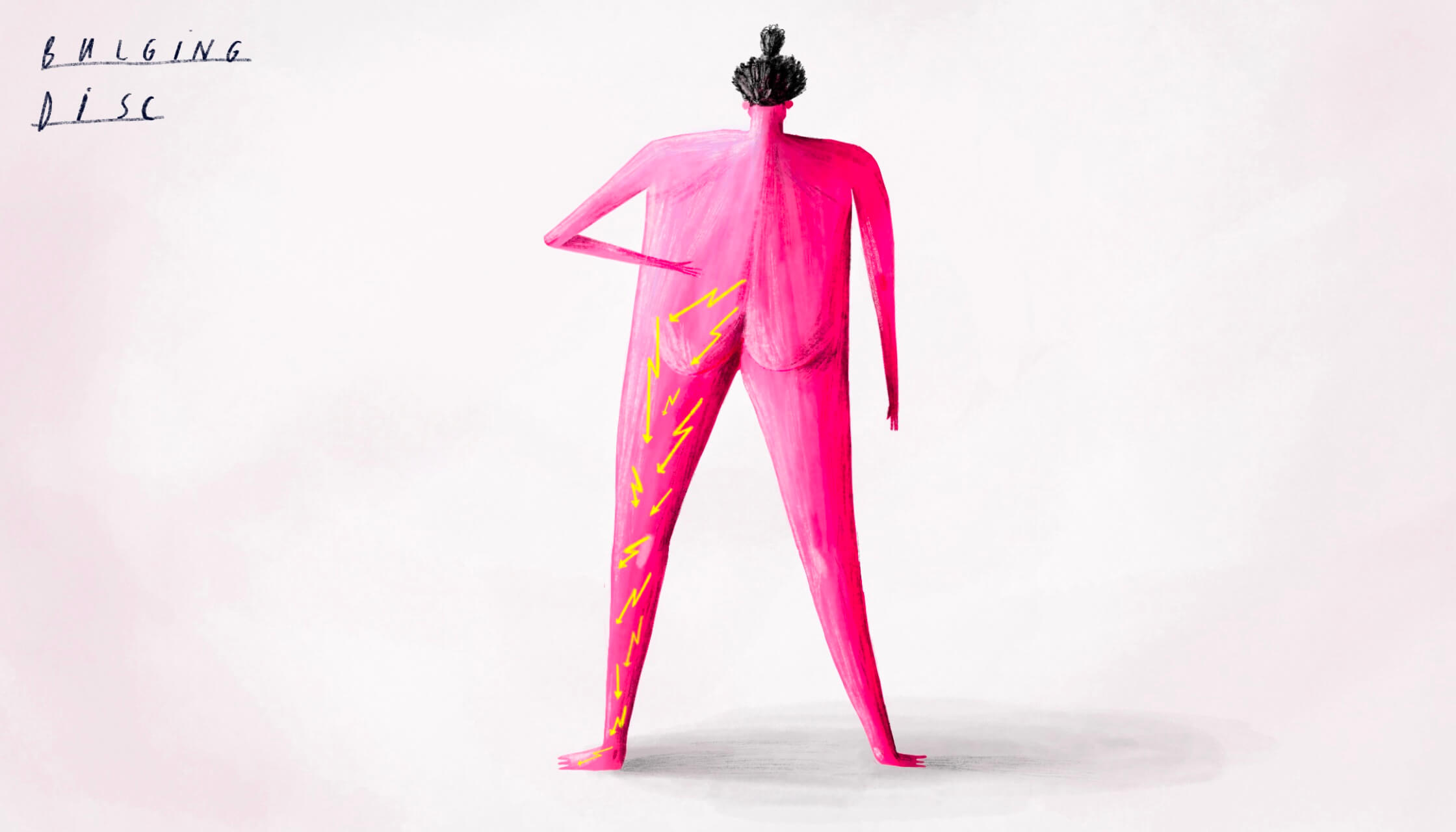
A bulging disc is a spinal disc affected by normal wear and tear.
A normal spinal disc is a remarkable piece of biological engineering, composed about 80% of water mixed up with special proteins that form a kind of gelatine centre (nucleus pulposus).
The nucleus pulposus fills the space between the adjacent spinal bones, allowing movement in all directions and absorbing movement shock, both of which are essential for daily life.
The spinal disc is incredibly strong. Its strength comes from being encased in the annulus fibrosus, a tough structure made of approximately 15 layers of fibres. This structure holds the disc firmly between the adjacent spinal bones, surrounding the nucleus pulposus and ensuring it remains in the centre without escaping.
There are many terms to describe a problematic spinal disc, meaning the same thing, ‘wear and tear’ in the spinal disc, with just some subtle differences. These terms include:
Nearly everyone experiences spinal wear and tear as they age. It’s a normal part of aging, much like getting wrinkles. In most people, this normal wear and tear does not cause any symptoms.
A big part of my job is to work out if the wear and tear showing up on your scan is the cause of your symptoms.
If left untreated, a damaged spinal disc can lead to worsening symptoms, including increasing pain, and a decreasing quality of life.
The main symptoms of a ruptured or bulging disc are spinal pain, nerve pain, or both.
In the cervical spine, this would be either neck pain (which often radiates into the shoulder muscles) or nerve pain down the arms (this can very often include pain that is in the shoulder blade). Pins and needles can also occur often.
In the lumbar spine, this would be either low back pain (which often radiates into the buttock muscles) or nerve pain down the legs. If the higher discs are involved in the lumbar spine, then this nerve pain is called femoratica and it radiates down the front of the thigh or shin. If, on the other hand, it involves the lower nerves, then it is called sciatica and it travels down the back of the legs and calf, often into the foot.
Regardless, it’s common to have a partially collapsed or bulging disc without any symptoms. In fact, over 95% of people with spinal wear and tear experience no symptoms at all.
The wear and tear (also known as arthritic changes ) producing a bulging disc is caused by two reasons.
As you age, the disc loses water and becomes dehydrated. This is a normal part of aging and is expected to happen over time. A normal disc is over 1cm in height, but this can reduce down to a few millimetres over the years and it can cause spinal pain from bone rubbing against bone.
Nerve pain can also occur due to a pinched nerve, which happens when a disc collapses down to the point where the nerve is jammed.
Another form of wear and tear involves the weakening of the annulus fibrosus (a ring surrounding the nucleus pulposus), creating a failure point. There is a lot of pressure in the disc just from gravity and your body weight, so when a failure point occurs, the centre of the disc bulges out through the annulus. Sometimes the annulus splits open completely and some nucleus pulposus escapes, jamming a nearby spinal nerve, often producing nerve pain.
Determining the cause can be challenging, but it’s crucial. There’s no point treating wear and tear if it isn’t the cause of symptoms. The detective work is essential.
The treatments I recommend are determined by your symptoms and scan results. It also depends on you, your age, lifestyle and quality of life you want to live.
During the assessment, I will ask you questions, examine you, and look at your scans to determine if your wear and tear is the silent, non-problematic type or the cause of any symptoms you have. Very often, any wear and tear seen on a scan is a red herring, but I can take you through all this when I see you.
A lot of the time a steroid injection and medication will be all that’s required. Most of the surgical options are keyholes.
A thorough assessment will make it clear what treatment is best for you.
Keyhole surgery is effective for immediate relief of pain without requiring repeated treatments.
If a nerve is squashed to the point that signals stop getting through to the muscles then surgery is usually required to take pressure off the nerve and allow it to recover as much as possible.
Remember that almost everyone walking around in the world has some degree of disc wear and tear or bulging disc. If it causes symptoms and you get either spine pain or nerve pain, then much more often than not this is not dangerous.
A bulging disc is dangerous only if it compresses the nerves that control the bladder, causing bladder dysfunction. Pain itself can disrupt bladder function (this is in fact very common but not dangerous), but if the bulging disc is physically compressing bladder nerves and the bladder stops working because of this compression then you need urgent surgery. While pain causing bladder problems is common and not dangerous, fortunately, bladder problems from squashed nerves are rare.
This is not genetic. It is just your body’s response to force and stress over time.
The cervical spine and the lumbar spine are the two most common areas to be affected. The thoracic spine is very uncommonly affected.
The best way to reduce wear and tear on the discs and prevent symptoms is to minimise stress on the spine. Good lifting technique and avoiding excessive rotation of the spine, particularly when carrying heavy load is vital.
Most people with symptoms from disc wear and tear recover through surgery, rest, or medication. The only variable is time. Surgery will expedite recovery, but is only required if your quality of life is suffering as a result of the symptoms, or you have weakness or bladder problems.
If you are concerned about symptoms of spine pain or nerve pain it’s advisable to seek a specialist’s opinion. Feel free to contact my team here. This does not necessarily mean you need surgery but it does allow a full professional assessment of your spine and symptoms to be performed, so you can start getting back to your normal quality of life. There are many factors to consider and I’m happy to help you with this.