

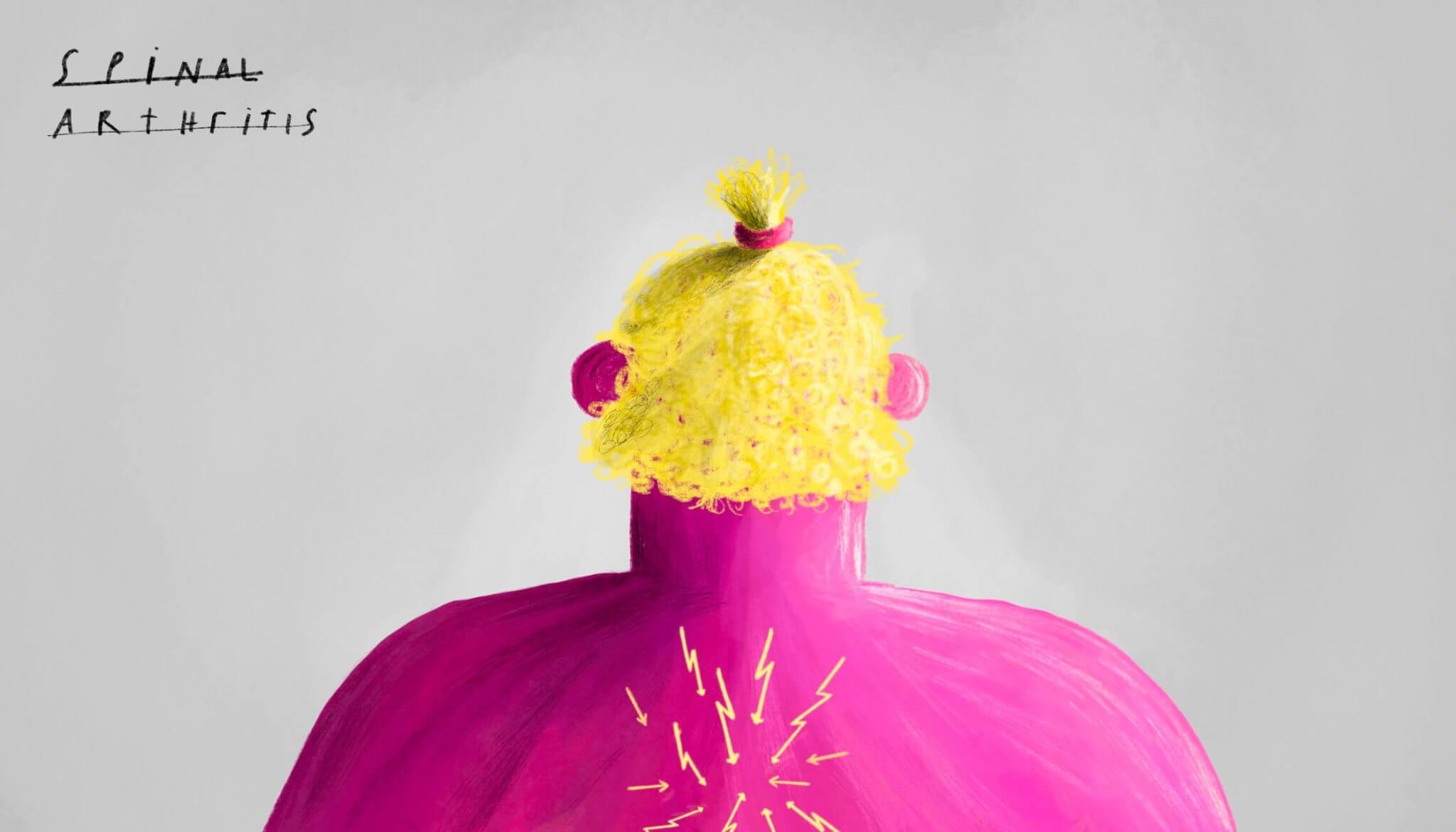
Spinal arthritis refers to wear and tear in your spine, caused by aging and the effects of gravity over time, and affecting the spine in different ways.
Over time, the bones in your spine can become thinner, a condition known as osteopenia or osteoporosis.
Similarly, as years pass, spinal discs weaken and collapse. A young, healthy disc is 80% water and over 1cm in height. The disc dehydrates and collapses as you age, sometimes to less than 1mm, potentially causing nerve pain or leading to spondylolisthesis.
Finally, gravity causes the joints and ligaments in the spine to thicken over time. It’s a bit like a callus on your hand, which gets bigger when subject to more force and friction. This thickened tissue often compresses spinal nerves, resulting in pain.
Everyone gradually develops arthritis in the spine over time. While some people have extraordinary genetics that slow this process, for most of us, spinal wear and tear is a natural part of aging, much like wrinkles.
95% of the time this wear and tear will not slow you down or cause you problems for most of your life. Over 90% of people with spinal arthritis experience no symptoms.
The two most common symptoms are back or neck pain (spinal pain) and nerve pain. Muscular pain is also common. If your back ‘locks up’ or feels stiff, it’s often due to overactive muscles.
Spinal arthritis is usually treated with physiotherapy, hydrotherapy, medication, or steroid injections.
As spinal arthritis is rarely dangerous, the goal is to manage your symptoms and help you regain your quality of life.
However, there are a limited amount of situations where surgery needs to be considered.
There are three reasons to perform surgery for spinal disc problems.
Even when it is not severe, if pain has been dragging on for a while and you’re tired of managing it with medication, surgery might be a good option.
If there’s an obvious underlying and treatable condition to surgery, such as spondylolisthesis, it’s worth considering the surgical route. There’s little point solidering on if there’s a relatively easy fix.
Almost never. It may hurt and affect your quality of life, but spinal arthritis is rarely dangerous.
Spinal arthritis is caused by age and the forces acting on your spine, including gravity and daily movement.
Some families have better genetics that slow wear and tear, but nothing can prevent it completely.
If you’ve had an accident or injured yourself lifting something heavy, that’s a different situation. I’d need to examine you and review your scans to assess your condition. Feel free to contact my team here if you require this.
Isthmic spondylolisthesis is a genetic spinal condition, but it’s not inherited from your parents or passed onto your children. You can learn more about spondylolisthesis here.
Treatment success can vary. After a thorough assessment, I can give you a clearer picture based on your specific situation. Contact my team and we can arrange this for you.
Many factors influence recovery time. I can provide a more accurate timeline after assessing you.
Injections, medication (aside from some side effects), and physiotherapy carry little to no risk, which is why they are the first line of treatment.
Spinal arthritis is an umbrella term for wear and tear in the spine. Spinal stenosis is a specific pattern of wear and tear. Think of spinal arthritis as music, and spinal stenosis as a specific genre like rock and roll.