

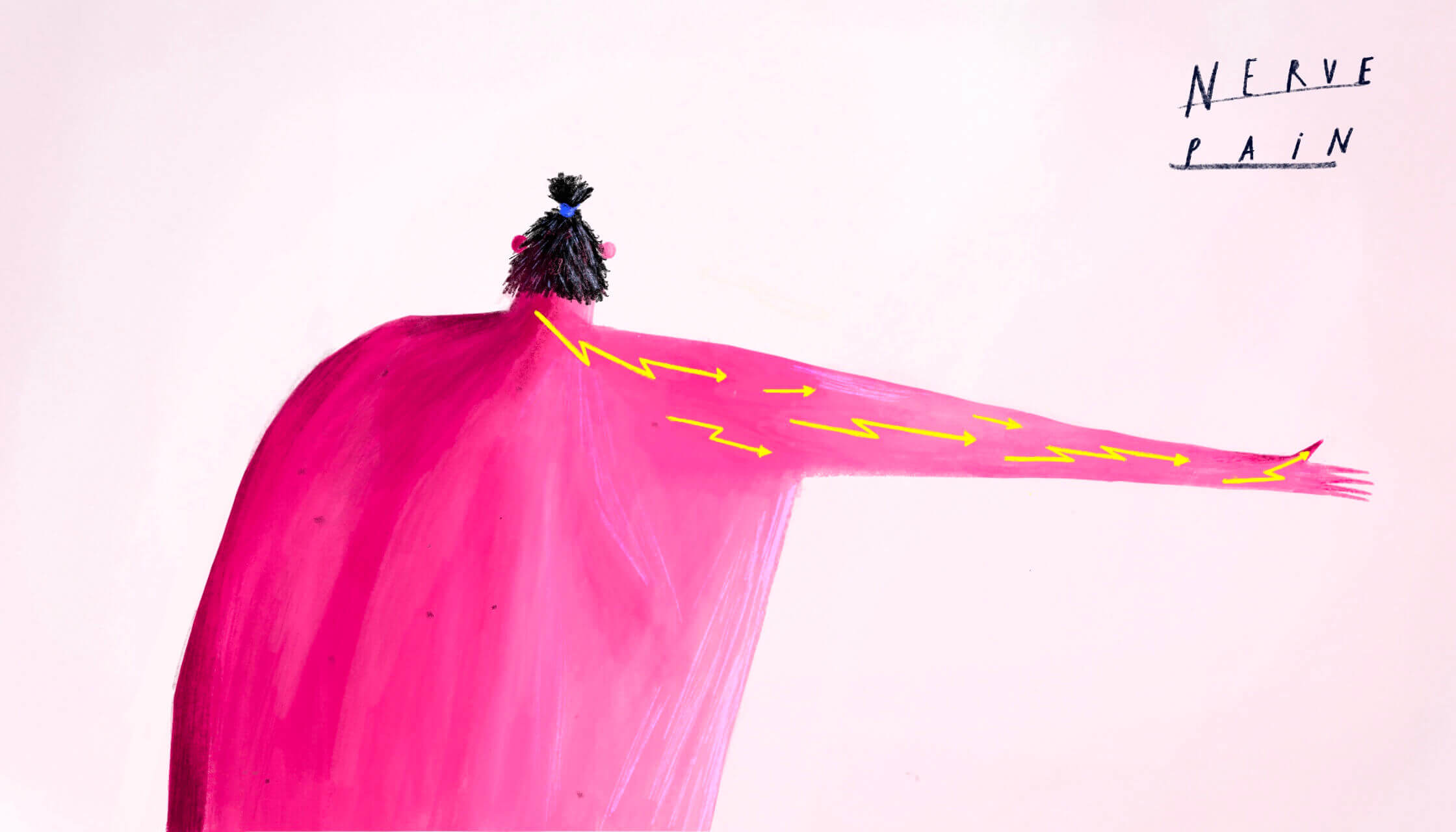
Nerve pain, also known as neuropathic pain or neuralgia, is pain caused by damage or injury to nerves in the spine.
The spaces in the spine where the nerves run are very small to start with, it doesn’t take much to irritate or squash them. Usually, a small bit of arthritic tissue is the cause. The resulting pain is disproportionate, just a few millimeters of compression can cause significant pain.
Nerve pain occurs when the nerves in the spine are irritated or compressed.
Nerve pain is quite common. There are three main types, depending on the area of the body affected.
Nerve pain it’s usually not dangerous. Sometimes the pain can be so severe it feels dangerous, and sometimes the nerve is so irritated and squashed that the muscles supplied by the nerve stop working (a sensation of weakness in the hand or foot), but rarely it is an actual dangerous medical condition.
Nerve pain only really becomes dangerous if bowel or bladder function is affected. This serious and dangerous condition is called cauda equina. Another dangerous sign is sudden, noticeable weakness.
I should see you immediately if either of the above is the case.
You can test yourself.
In most cases, the prognosis is positive. If you would like your situation fully assessed, then contact my team and I will go through this thoroughly with you.
Nerve pain typically stems from nerves in the back and neck, and in most cases, only one nerve is affected. There are 3 symptoms that can occur.
Pins and needles are a sign of nerve root irritation or compression. Typically, pins and needles occur in the hands or feet, and the pain can spread down to the ankles or wrists.
Another condition called, neurogenic claudication, occurs in the lower back and compresses both the sciatic and femoral nerves. Instead of typical nerve pain, it causes aching in the front and back of the legs, accompanied by pins and needles. Patients often describe the sensation as “all over my legs.” Typically, symptoms worsen with walking and improve with rest.
The most common cause of nerve pain is wear and tear in the spine. Often, the nerve has been compressed by arthritic tissue or a bulging disc for some time, and a sudden movement further irritates the nerve, triggering pain and symptoms.
It’s a bit like having your hand caught in the cookie jar: you don’t feel pain until you start trying to yank your hand out, causing it to become bruised and sore.
It’s very common to hear stories like:
Did you know that in most people with nerve pain, or pins and needles, the symptoms will burn out in about 1-2 months and they can return to normal activity? A simple steroid injection, pilates, or physiotherapy often helps.
Sometimes surgery is actually needed and there are three reasons I would recommend surgery for nerve pain.
Ultimately, the decision to proceed with surgery depends on your symptoms, examination findings, scan results, and current quality of life. If you would like a thorough assessment of your condition, please contact my team to book an appointment.
Typically no, nerve pain isn’t hereditary.
Steroid injections carry very little risk. The main concern is whether the injection is effective or if you may need additional injections.
The risk of modern keyhole surgery for sciatica, femoratica, neurogenic claudication, or brachialgia is less than 1% under my care. This is one of my subspecialties.
Nerve pain is usually not dangerous, just very painful. Whether you just rest it all comes down to your current quality of life. If you would like to discuss this further with me then contact my team here to book an appointment.
In most cases, yes. After reviewing your symptoms, examining you, and assessing your scans, I’ll have a clearer picture of your situation. Once I understand the quality of life and activity level you’re aiming for, I’ll be able to give you a more accurate idea of what to expect in terms of recovery and the time frame involved.