

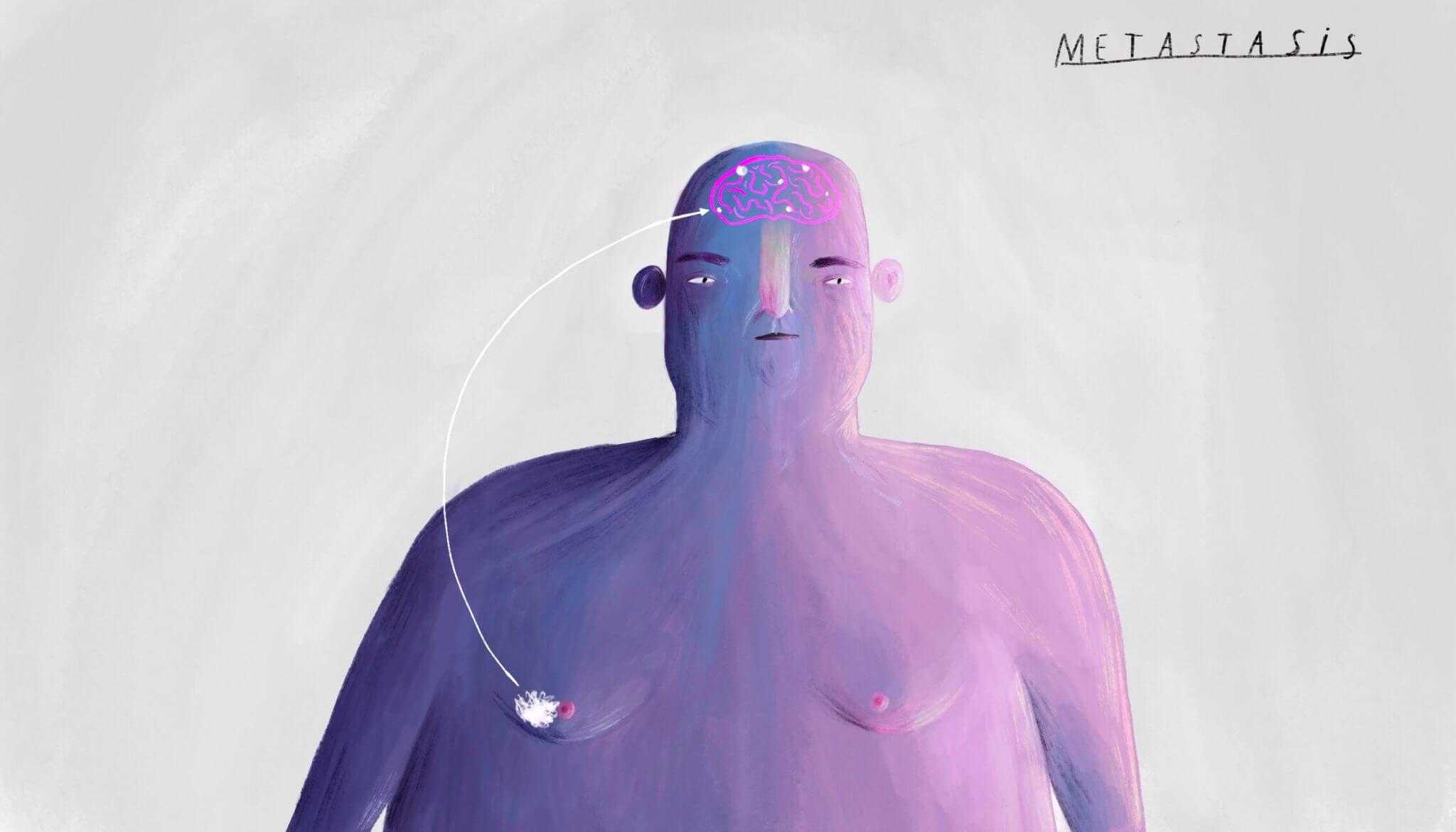
Metastatic means a cancer has spread from another body part via the bloodstream to the brain. It’s also called a ‘secondary’. This is different from a primary brain tumour, which originates in the brain.
Brain metastases are the most common brain tumours neurosurgeons see — but they’re still rare overall. Some cancers (like breast, lung, and melanoma) are more likely to spread to the brain, while others rarely do. Only about 15% of women with breast cancer, for example, develop brain metastases. Even with cancers like melanoma, which affects around 16,000 Australians each year, only a fraction will spread to the brain.
Brain metastases are a very serious condition and without urgent treatment it will be fatal. While it does remain a serious condition, modern chemotherapy, immunotherapy, stereotactic radiosurgery, and neurosurgery have provided significant improvements for patients.
Caused by the tumour’s pressure on the brain, which may also lead to confusion or disorientation.
These can include speech problems, weakness in the face, arms, or legs, or vision issues like blind spots, depending on which part of the brain is affected.
More commonly caused by other brain tumours, but metastases can occasionally trigger them. Long-term epilepsy is rare.
Depending on the type of cancer, the treatment will be a different combination of the following options.
Aimed at removing tumour tissue to relieve pressure on the brain, reduce symptoms, prevent further neurological decline, and increase life expectancy.
Drug-based treatments designed to destroy cancer cells via potent chemicals or stimulating the bodies own immune response.
Uses targeted x-ray radiation to kill cancer cells, reducing tumour size and relieving symptoms.
We have good evidence now that shows if a stroke occurs during surgery (because of attempts to remove every last bit of the tumour), your prognosis can actually worsen.
That’s why we remove as much as possible, but can’t always remove 100%.
When I assess you, I’ll determine whether surgery is the best option for you and how much of the tumour can be safely removed, along with what this means for your overall outlook.
Receiving a brain tumour diagnosis is devastating. It’s crucial that you feel as in control as possible. That includes knowing everything you can before going into treatment. And I’m here to guide you through that process.
Neurosurgery has come a long way in modern times.
Now surgery can be done quite routinely and with relatively quick recovery.
Remember, our main goal is to improve your quality of life. We do this by removing as much of the tumour as possible. Performing an operation that leaves you the same, or even worse, doesn’t help us achieve that goal. My modern approach avoids aggressive surgery that tries to remove everything at the expense of your well-being. When I see you, I’ll explain everything in detail, including how we can get you through this as effectively and safely as possible.
News of a brain tumour for you or your loved ones is devastating. It comes like a freight train. Out of nowhere. And brings a million questions with it. That’s where I come in. My team and I are more than happy to review your case.