

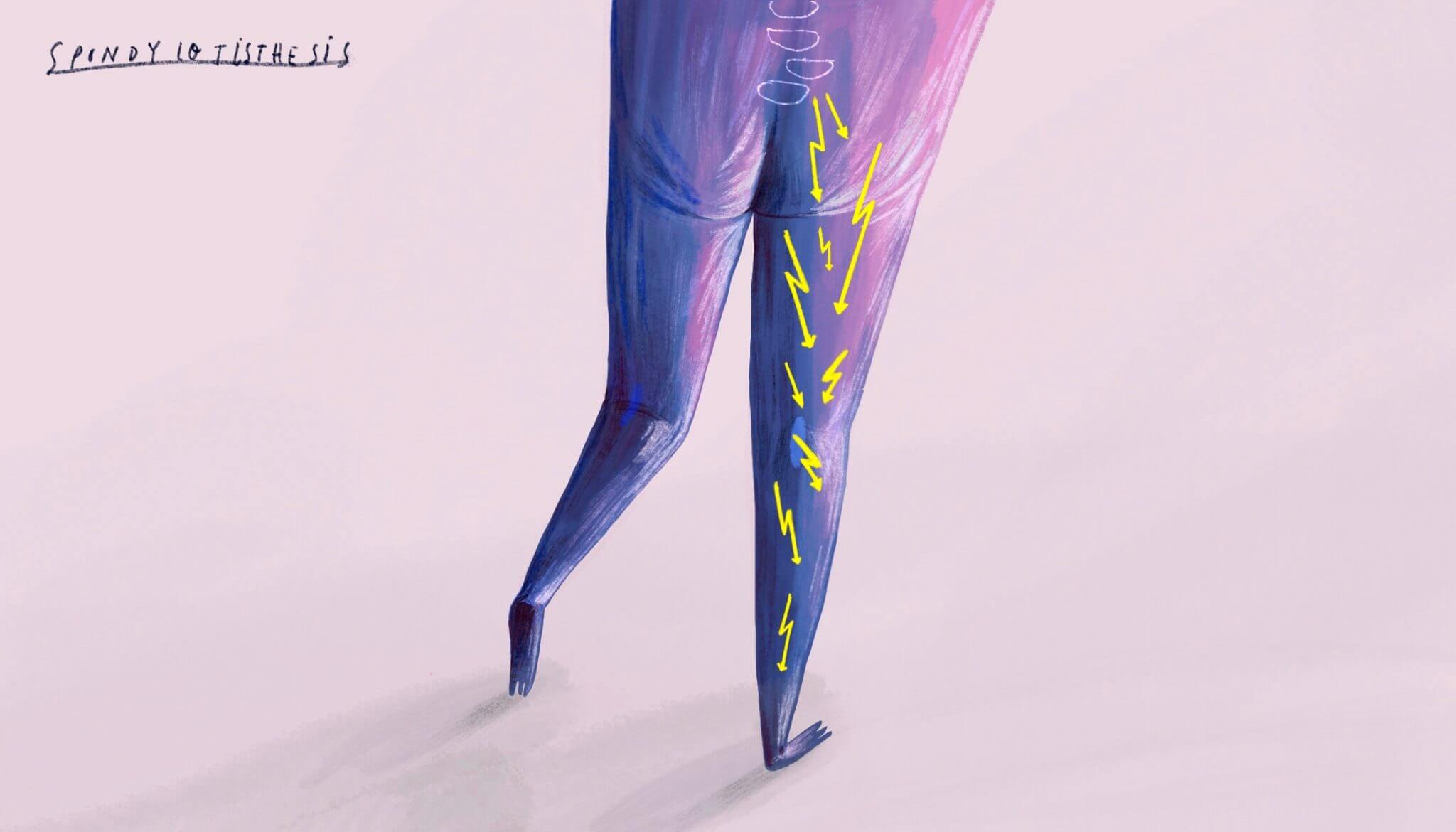
Spondylolisthesis is when one spinal bone slips either forward or backward on another spinal bone. (‘Spondy’ refers to the spine, and ‘listhesis’ means slipping.)
It’s a common result of wear and tear in the spine, occurring most often in the neck or lower back. It rarely affects the thoracic spine.
About 1 in 20 people can suffer from spondylolisthesis, with most people having few or no symptoms.
Spondylolisthesis is usually not dangerous. However, it can become a concern when it starts to affect nearby nerves or joints, leading to pain, nerve irritation (radiculopathy), or changes caused by disc degeneration or arthritis.
The two most common symptoms of spondylolisthesis are back pain and nerve pain, with the lumbar spine being the most commonly affected area.
The back pain is purely mechanical. The slipped bones slide against each other during normal movement, causing pain as the bones compress the nerves exiting the spine. Even though the movement is minimal (a few millimeters), the nerve pain can be intense.
There are 5 main causes of spondylolisthesis.
Spinal discs are 80% water and over 1cm in height. As you age, discs lose water and collapse in height, this weakens the disc and allows the bones to slip on each other. This is the most common cause.
This means you were born with it.
In rare cases, an accident can cause two bones to slip against each other.
Very rarely, certain cancers can weaken spinal bones or invade vertebrae, causing instability and slippage.
Occasionally, surgery for other spinal issues can weaken the connection between bones, causing them to slip. Fortunately, with keyhole surgery, this is much less common. Traditional spinal fusion carries a 5-30% risk of slippage, depending on the type of fusion.
The first step is to determine if spondylolisthesis is causing symptoms. In many cases, it’s silent, allowing you to live a normal life without restrictions.
If it’s causing back or nerve pain, confirmed through a thorough clinical and radiological exam, there are two main treatment options, with both focusing on strengthening the affected part of the spine.
This can be done through physiotherapy, to strengthen the muscles, or through surgery to fuse the bones, preventing further slippage.
Pain is caused by movement between the bones or bone rubbing on bone. Surgery prevents the bones from slipping, effectively treating spinal pain. By fusing the bones together with screws, the movement is stopped permanently, and the pain is relieved.
Surgery can also relieve nerve pain by preventing the bones from compressing the nerves.
Additionally, surgery can remove any thickened arthritic tissue compressing the nerves, providing further relief.
Most of the time no. It is just the pain it causes, either back or nerve pain, and the effect of that on your quality of life.
There is one genetic form called isthmic spondylolisthesis, but it’s not inherited from your parents or passed to your children.
All other causes of spondylolisthesis are not genetic.
Spondylolisthesis is graded to describe the severity, based on how far one bone has slipped over another.
Spondylolisthesis responds quite well to surgery. Since it’s a purely mechanical problem — one bone slipping and sliding unnaturally on another bone — screwing the two bones together effectively addresses the root cause of symptoms.
To get the best results, you need to commit to a full recovery period.
“Recovery is like compound interest; if you do the time, you’ll get the best result. If you shortchange yourself and bail out early you will miss out on significant benefits long term.”
However, recovery doesn’t mean complete rest. I encourage you to stay as active as possible to regain confidence quickly.
The two main restrictions are not lifting more than 20kg and avoiding excessive twisting for six months.
I’ll guide you through the requirements, and you might be surprised by how much you’re allowed to do. For more detailed information on postoperative recovery and the key steps to achieving the best outcome, please refer to the recovery section here.
Physiotherapy, injections, and medication carry minimal risk, though their effects may not be long-lasting.
The risks of surgery depend on the specifics of your procedure, which I will discuss with you in detail during our consultation.
Yes, you can rest it. Spondylolisthesis is not usually dangerous, and further damage is unlikely. It all depends on your quality of life and how well you’re coping with the symptoms.
Many factors influence the best plan for you, including your symptoms, scan results, examination findings, activity levels, and life goals. If you’d like me to guide you through this process to achieve the best outcome, contact my team.
If you’d like me to assess your symptoms, contact my team. We’ll arrange the necessary scans so we can have a thorough discussion during your appointment.