

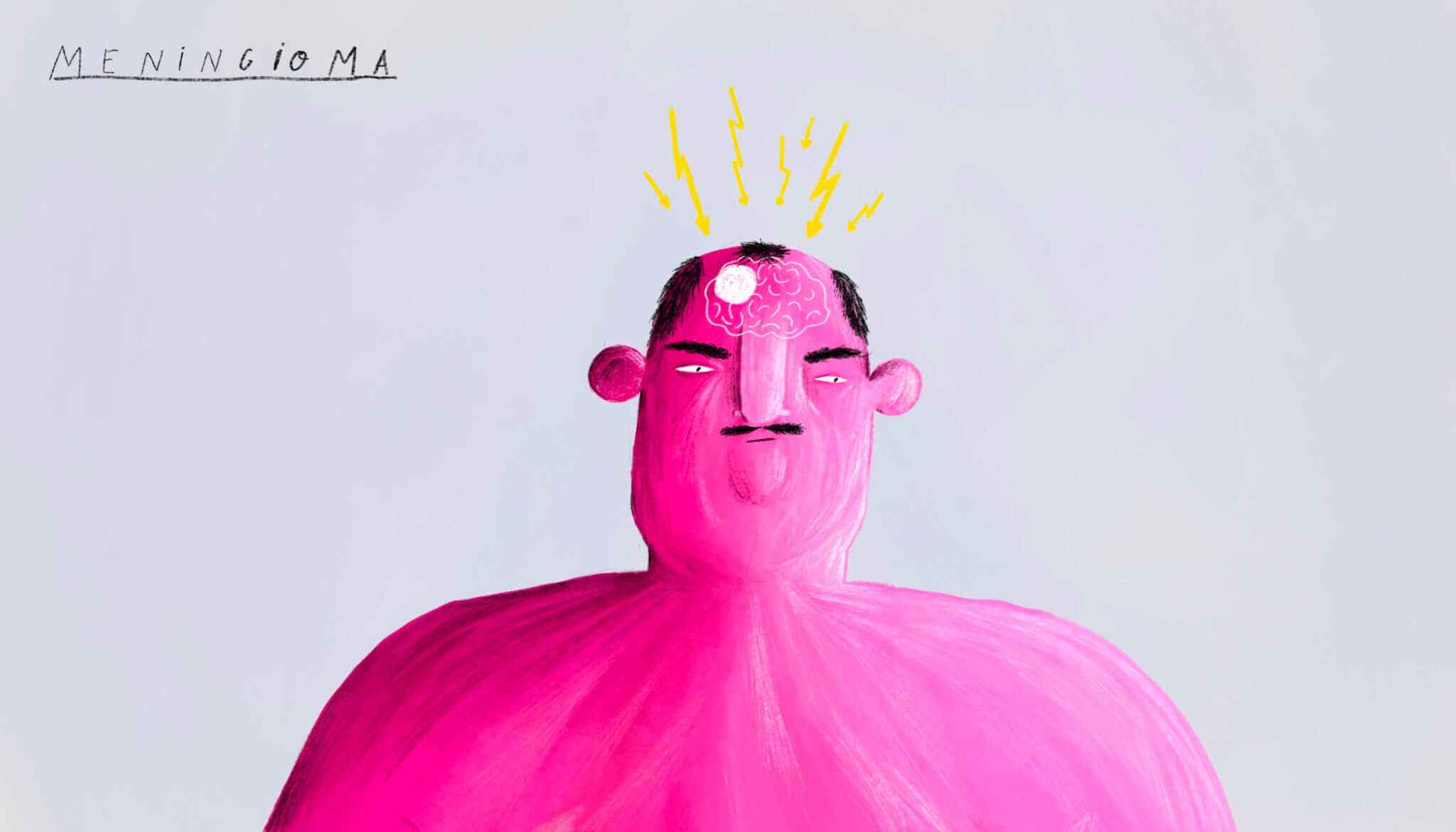
A meningioma is a type of primary brain tumour that starts in the layers of tissue (called meninges) that cover the brain and spinal cord. Most meningiomas are benign (non-cancerous) and grow slowly, but depending on their size and location, they can still cause symptoms and may require treatment—often surgery.
Meningiomas are classified into 3 grades, from benign to cancerous.
Many people live normal lives never knowing they had a meningioma, due to its benign nature.
Meningiomas are among the most common brain tumours treated by neurosurgeons. They don’t grow from brain tissue itself but from the brain’s lining.
They develop from the middle brain layer, the arachnoid, named because it resembles a spider’s web under magnification, and they only affect the lining of the brain and spinal cord, which are part of the same continuous lining. They do not spread to other parts of the body.
Thankfully, meningioma grade 1 (benign) is the most common by far.
Most meningiomas are benign, meaning they don’t turn into cancer or spread to other parts of the body. However, grade 2 and 3 meningiomas are more dangerous because they grow more quickly and can spread further along the lining of the brain, sometimes invading the underlying brain tissue. These grades always need treatment.
Meningiomas cause problems by gradually compressing parts of the brain as they grow. They can cause symptoms like headaches, stroke-like effects from pressing on vital areas of the brain, or seizures.
This can be dangerous, and if you experience these symptoms, treatment will be necessary.
Caused by the tumour’s pressure on the brain, which may also lead to confusion or disorientation.
These can include speech problems, weakness in the face, arms, or legs, uncoordination, or vision issues like blind spots, depending on which part of the brain is affected.
Other types of brain tumours are more likely to cause seizures, though occasionally, meningiomas can trigger them. It is rare for this to result in long-term epilepsy.
Surgery is the primary treatment for meningiomas, as they cause issues by pressing on and irritating parts of the brain. The most effective way to address this is through surgical removal of the meningioma.
For meningiomas that are too risky to remove surgically, radiotherapy is a viable option. Modern radiotherapy technology is highly precise, targeting the tumour while sparing healthy brain tissue.
After reviewing your scans and examining you in person, I will be able to determine if surgery is necessary. While the decision process can be complex, this summarizes the approach.
There are three primary reasons for undergoing meningioma brain surgery.
This means length of life. Sometimes, by removing most or all of the tumour your overall prognosis gets a little bit better. Furthermore, by removing it, it will make the effects of chemotherapy or radiotherapy more positive.
Interestingly, I can manage many meningiomas without doing surgery, just by watching them with serial scans. There are many factors to consider here though. I would need to assess your case, including your medical imaging, to determine the best course of action.
Neurosurgery has come a long way in modern times.
Now surgery can be done quite routinely and with relatively quick recovery.
Remember, our main goal is to improve your quality of life. We do this by removing as much of the tumour as possible. Performing an operation that leaves you the same, or even worse, doesn’t help us achieve that goal. My modern approach avoids aggressive surgery that tries to remove everything at the expense of your well-being. When I see you, I’ll explain everything in detail, including how we can get you through this as effectively and safely as possible.
Meningiomas are quite common for neurosurgeons to treat, but they are rarely talked about outside of the medical field.
Meningiomas are usually not inherited. You didn’t get them from your parents, and you can’t pass them on to your children. There is one rare genetic condition, NF 2, that can cause meningiomas, but it is very uncommon.
Meningiomas only affect the lining of the brain and spinal cord, which are part of the same continuous lining. They do not spread to other parts of the body.
Surgery is highly effective for grade 1 meningiomas. Grades 2 and 3 often need more intensive treatment. It’s complex, but I’ll explain everything in detail during our consultation.
Recovery after meningioma surgery typically takes about 2 weeks to start feeling normal again, but it varies depending on the type of surgery. I’ll provide a clearer timeline once I’ve seen your scan.
It is vital that you are in control as much as possible, and that includes knowing everything you can going into treatment. I will take you through this and all the risks and benefits of treatment.
Here are the main risks of surgery for brain tumours:
Fortunately with modern technology and equipment, the risks are significantly less than what they used to be 20 or even 10 years ago.
Modern neurosurgery focuses on achieving the best results while minimizing harm. I take this very seriously and carefully plan how to restore your quality of life without unnecessary risk.
News of a brain tumour for you or your loved ones is devastating. It comes like a freight train. Out of nowhere. And brings a million questions with it. That’s where I come in. My team and I are more than happy to review your case.